Buying a guitar and accessories
Tips from Gitaarschool Ermelo for buying a guitar, amplifier, strings and picks. Honest advice, with concrete brands and models.
I wouldn't be quick to recommend a complete guitar package, mainly because the amplifiers they include are often not very good. Better to choose the best option per part. A few common questions below; if you're still unsure, just ask during your trial lesson.
Start electric or acoustic?
Mostly want to play pop, rock or blues and enjoy variety in sound? Then an electric guitar with an amp is the logical choice. Want to accompany songs and sing, become a singer-songwriter, or play anywhere without power? Then an acoustic (steel-string) guitar suits you better. Not sure? In the trial lesson we play on both, so you feel what fits.
A child who is starting
For children, size matters most: it has to match their height and arms so playing stays comfortable. Roughly, up to about age 8 a ½ guitar often fits, then a ¾, and from about 11 to 12 usually a full size, but measuring beats age. Nylon strings (a classical guitar) are gentler on the fingers at first. We'll look together at what fits your child's age, hands and the music they enjoy.
Classical (nylon) or steel?
A classical guitar has nylon strings: soft on the fingers, with a warm, round tone, lovely for classical, bossa nova or a gentle start. A steel-string guitar sounds brighter and louder and is the standard for pop, folk and singer-songwriter. Can't decide? That's exactly the kind of thing to try out together.
New or second-hand?
An amplifier is perfectly fine second-hand. For electric guitars, new is safest, mainly because of fret wear; a heavily played second-hand guitar can be an expensive surprise. Still considering something second-hand? Send me a link and I'll take a look with you.
Budget packages (indication, 2026)
Models and prices change; we update this regularly. Budget separately for a guitar and, for electric, an amplifier.
- Entry. Electric: Squier Sonic with a second-hand Roland Cube or Boss Katana. Acoustic: a Sigma. Plenty to get started well.
- Solid. Electric: Yamaha Pacifica or Ibanez with a Boss Katana 50. Acoustic: Yamaha, Ibanez or a PRS entry model.
- Serious. Electric: Sire (or higher) with a Boss Katana 50 or higher. Acoustic: a better Sigma or higher. Instruments you'll enjoy for years.
For an electric, a new instrument is safest (with regard to fret wear and so on). I'd go for a so-called Power Strat: two single-coils and one humbucker. That makes this type the most versatile guitar, from pop to rock and essentially any style.
I hear very positive things about the current Squier Sonic range (Squier is basically always fine). Ibanez and Yamaha always have good entry-level models too; the Yamaha Pacifica is often a little pricier but an excellent buy. The brand Sire makes beautiful instruments, but in a higher price bracket.
For a budget-conscious purchase, Sigma is a lovely brand. PRS now has a nice entry-level model, and Yamaha and Ibanez are reliable here too.
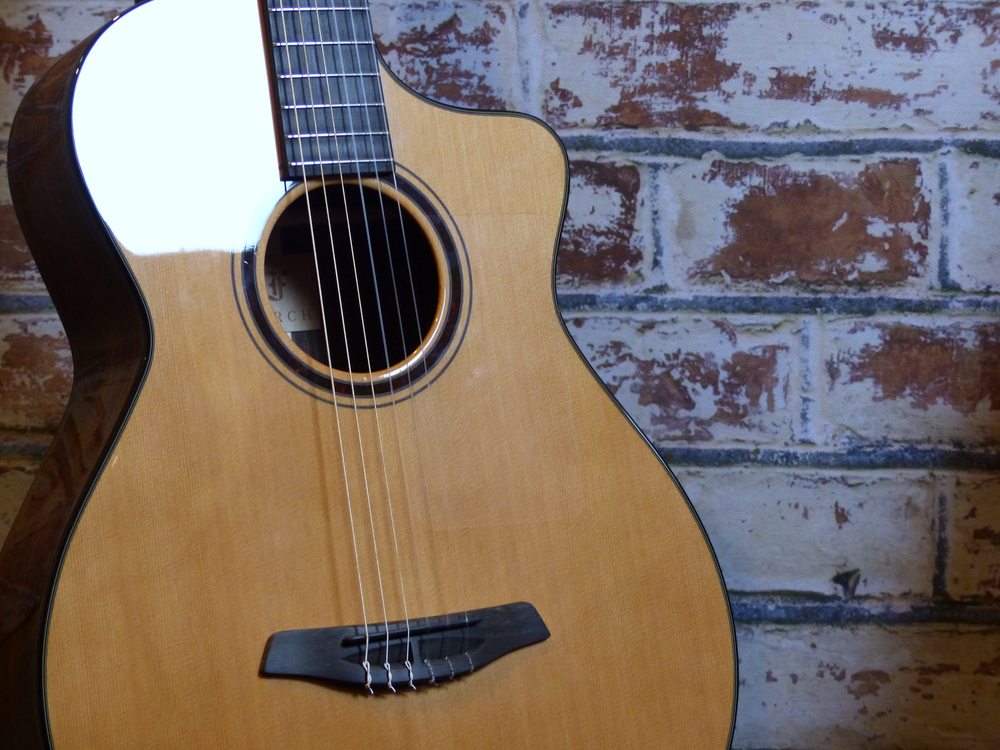
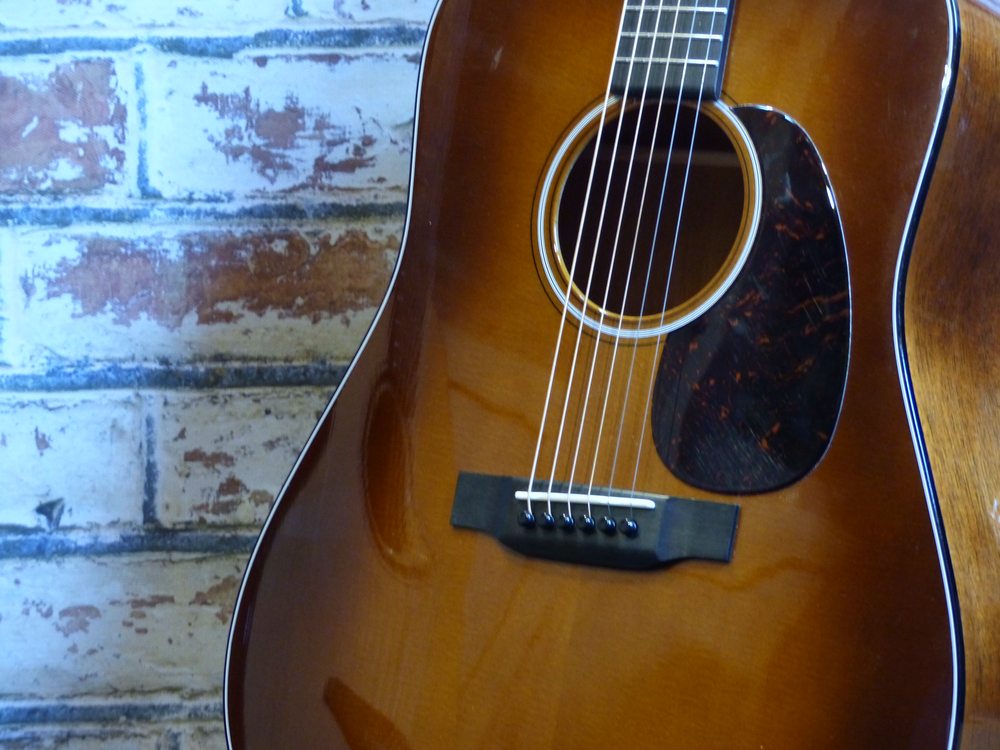
I recommend an OM model rather than a Dreadnought. An OM has a slightly more modest body and a neutral tone. A Dreadnought is more rectangular, bigger and a bit more specific in sound.
The best starter amp, which also lasts a long time, is the Boss Katana 50. Amplifiers are also easy to find second-hand. Good second-hand options are an earlier Boss Katana 50 (v1 or v2), or, certainly for the early stage, the Roland Cube (20XL, 30 or 40).
Strings
For most electric guitars a 009 or 010 set works fine (for example Ernie Ball). It's handy to keep spare single strings, especially the thin ones that break sooner.
Picks
A nice basis: Dunlop Flow (1.0 to 2.0 mm) or the classic Dunlop Jazz III. For heavier work the Dunlop Big Stubby (3 mm) or Primetone. Do try different thicknesses, pick choice is very personal.
Unsure about a purchase? Just ask during your lesson or get in touch. I'm glad to help you think it through.